ALLERGY HOME

  • ABOUT BAYER
  • ABOUT ALLERGY
  • OUR BRANDS
  • GUIDELINES
  • EVENTS

BURDEN OF ALLERGIC RHINITIS IN ADULTS

OVERVIEW
 

• Atopic diseases such as allergic rhinitis, atopic dermatitis, and food allergy in addition to asthma have profoundly increased in frequency in recent decades.1

• For more than a decade, the relationship between these diseases has been sometimes referred to as ‘the atopic march’. The basis for the atopic march lies in the theory that all allergic diseases may share a common ground and that this cohesion should be considered in their management.1

• More recently, it has been acknowledged that type 2 helper T cells play a critical role in all atopic diseases. The body reacts to antigens with a complex immune response starting with Th2 cells, later on, control IgE production against allergens, then, cross-linking of IgE on mast cells releases mediators of hypersensitivity such as histamine and can result in immediate symptoms and in inflammation of the airways that can either manifest as allergic rhinitis, asthma, or both.1

Allergic Rhinitis Affects Quality of life in Adults

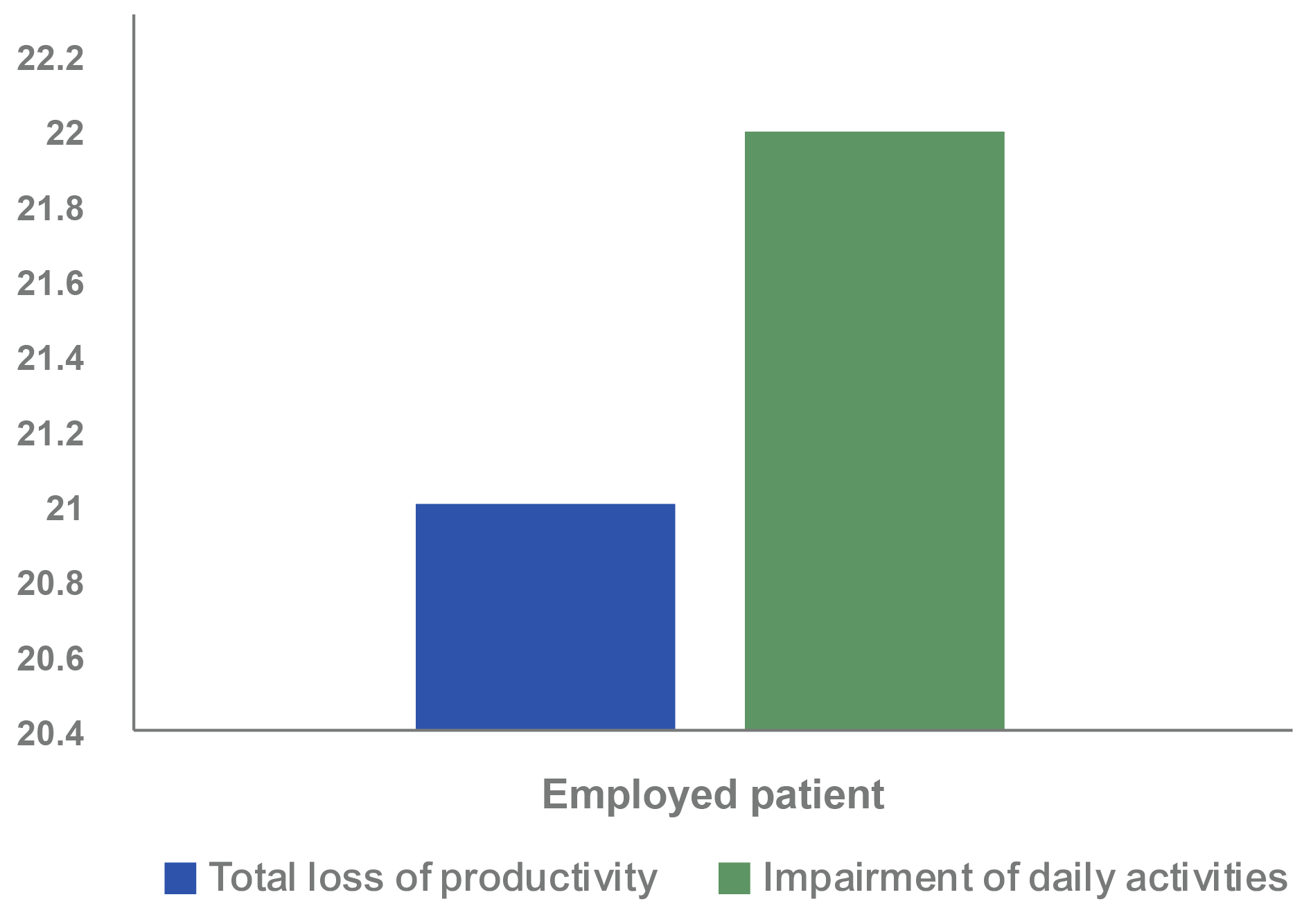
Based on a questionnaire assessing 683 allergic rhinitis adult patients:1,2

Allergic Rhinitis causes an impairment in work productivity and daily activity

3.6%

of adults had missed work.2

36%

had impaired work performance due to allergic rhinitis.2

BURDEN OF ALLERGIC RHINITIS IN CHILDREN

OVERVIEW

The presentation of allergic rhinitis in childhood is more frequent in boys.3

• Children with a bilateral family history of atopy may develop symptoms more frequently and at a younger age than those with a unilateral family history.3
• Aeroallergen sensitization rarely begins before 6 months of age but may start between 6 months and 2 years of life.3
• Infants born to atopic families are sensitized to pollen aeroallergens more frequently than to indoor aeroallergens in the first year of life.3

Patients display symptoms of Rhino-conjunctivitis linked to allergic rhinitis.4, 5

According to data from the International Study for Asthma and Allergies in Childhood:

8.5%

In the 6 to 7 years of age2

14.6%

In the 13 to 14 years of age2

Allergic Rhinitis Affects Quality of life in Children

30%

Decrease in parent's perceived productivity in children.6
36.8%

Decrease in the mean of classroom activity impairment.5
7.9%

Frequent snoring children had poorer academic performance.5

Th2: type 2 helper T cells; IgE: immunoglobulin E.

References:

  • 1. Dierick, B. J., van der Molen, T., Flokstra-de Blok, B. M., Muraro, A., Postma, M. J., Kocks, J. W., & van Boven, J. F. (2020). Burden and socioeconomics of asthma, allergic rhinitis, atopic dermatitis and food allergy. Expert review of pharmacoeconomics & outcomes research, 20(5), 437-453.
  • 2. Roger A, Arcalá Campillo E, Torres MC, Millan C, Jáuregui I, Mohedano E, Liñan S, Verdu P, Rubira N, Santaolalla M, González P, Orovitg A, Villarrubia E. Reduced work/academic performance and quality of life in patients with allergic rhinitis and impact of allergen immunotherapy. Allergy Asthma Clin Immunol. 2016 Aug 11;12:40. doi: 10.1186/s13223-016-0146-9. PMID: 27525014; PMCID: PMC4982204.
  • 3. Meltzer, E. O.(2016). Allergic Rhinitis. Immunology and Allergy Clinics of North America, 36(2), 235–248. doi:10.1016/j.iac.2015.12.002
  • 4. Akhouri S, House SA. Allergic Rhinitis. 2022 Jun 5. In: StatPearls [Internet]. Treasure Island (FL): StatPearls Publishing; 2022 Jan–. PMID: 30844213.
  • 5. Mir E, Panjabi C, Shah A. Impact of allergic rhinitis in school going children. Asia Pac Allergy. 2012 Apr;2(2):93-100. doi: 10.5415/apallergy.2012.2.2.93. Epub 2012 Apr 30. PMID: 22701858; PMCID: PMC3345332. 6-Meltzer EO, Blaiss MS, Derebery MJ, Mahr TA, Gordon BR, Sheth KK, Simmons AL, Wingertzahn MA, Boyle JM. Burden of allergic rhinitis: results from the Pediatric Allergies in America survey. J Allergy Clin Immunol. 2009;124(3 Suppl):S43-70.

BAYER CONSUMER HEALTH FOR HEALTHCARE PROFESSIONALS

  • Welcome
  • About Allergy
  • Our Brands
  • Guidelines
  • Events
  • Privacy Statement
  • Conditions of Use
  • Imprint
  • Privacy Statement for Pharmacovigilance
  • Patient Information leaflets

Contact Information

Dubai Science Park Tower (North)

13th Floor/14th Floor (Units 1406 & 1409)

P.O. Box 500829

Dubai, United Arab Emirates

Phone: +971 4 4452700

Web: https://middleeast.bayer.com

For Medical Inquires: bme.ch-medinfo@bayer.com

For Safety Reporting: www.safetrack-public.bayer.com or pv.me@bayer.com

©2024. All rights reserved. Unless otherwise indicated, all trademarks are owned by Bayer, and its affiliates, or licensed for its use.